
We need to have a talk. No, not the “here’s a list of free stock photo sites!” kind of talk. The real one. The one about how sourcing fonts and images for designers in the template industry is genuinely one of the most important things you will do for your business, and also one of the most commonly done wrong.
We’ve been selling website templates since 2013. Between the two of us, that’s over 20 years of watching this industry grow, evolve, and occasionally embarrass itself. And the single fastest way we’ve seen designers blow up a business they worked hard to build? Getting this wrong.
Pin this post for later:
Sourcing Fonts for Your Showit Templates
First, an important housekeeping note: Sam is team free fonts. Rachel is team paid fonts. We have been having this debate for years and we are still no closer to resolving it. Ask either of us and we will tell you fonts and/or images can make a break a good Showit template… but it could also be personal preference, we all have our hills to die on.
What is NOT a matter of preference is proper licensing, hierarchy, contrast, and sizing. Those matter regardless of where your fonts come from. Now let’s talk about where they come from.
Free Fonts: Actually a Great Option (With Caveats)
And no, we aren’t talking about the Google font! If you’re newer to selling templates or you’re not making sales consistently yet, free fonts are your best friend. Google fonts are free for commercial use, easy to implement, already cached in a ton of browsers (which actually helps your load time), and downloadable for print.
The downside is mostly that Google Fonts has become so popular that you’ll start noticing your templates look like everyone else’s templates. That’s not a dealbreaker, it’s just something to be aware of as you grow.
The caveat that actually matters: not every free font is free for commercial use. Just because you found it on a free resource does not mean you’re cleared to drop it in a template you’re selling. Check the license. Every time. No exceptions. Always be sure it is approved for commercial use since the font will be distributed within the template, even if it’s not extractable.
Paid Fonts: More Freedom, More Responsibility
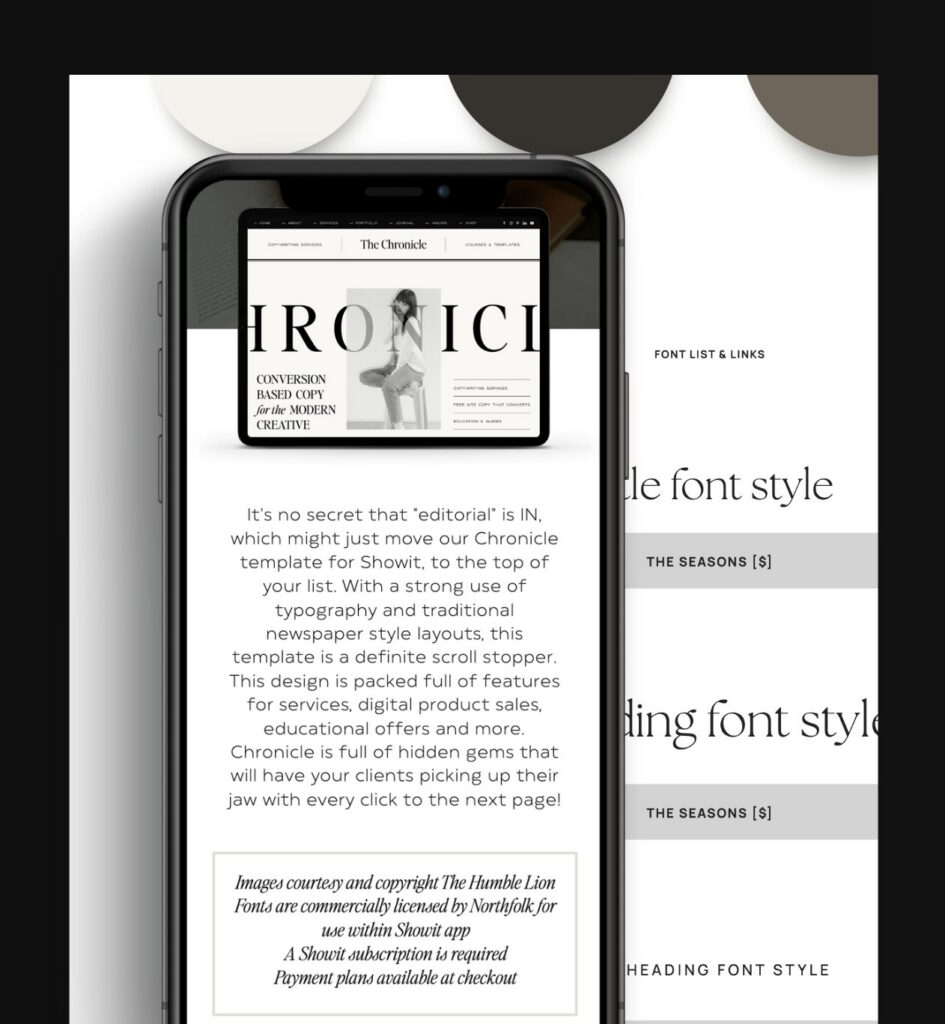
Rachel’s whole case for paid fonts comes down to this: they give you creative breathing room, better kerning, more weights and ligatures, and a real shot at standing out in a market where everyone is pulling from the same Fonts pool.
She’s not wrong. A well-chosen paid font can be the thing that makes someone screenshot your template and send it to their designer friends.
But here’s the thing Sam always points out: a lot of people are buying templates because custom design is out of budget. Stacking a font purchase on top of your template price could create real friction for your customer if they want to use it outside of your template. Keep paid fonts reasonable relative to what you’re charging, never stack a $100+ font on a $197 template. One paid font per template max. And if you’re using licensed fonts, say so clearly in your listing and link to where customers can buy them (bonus, font creators will LOVE you for this!).
If you are going to use PREMIUM paid fonts… you MUST purchase the correct licensing.
Font Licensing: This Is Where People Get Into Trouble
Okay, this is the part we really need you to sit with. Font licensing has gotten significantly more restrictive, and a lot of designers are operating on assumptions that are going to cost them. Here’s what “more restrictive” actually looks like in practice:
Some foundries license by style, meaning bold, italic, and thin are each a separate license. Others license by product, meaning if you have two templates using the same font, you need two licenses. And then there are annual licenses, meaning you’ll pay the fee again next year or you’re out of compliance.
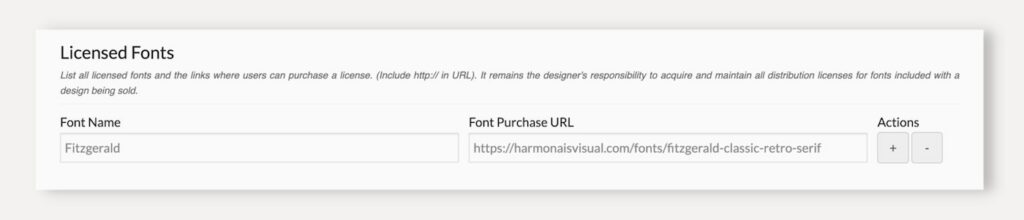
Commercial licensing runs anywhere from $100 to $750 per font. So before you spend that, genuinely ask yourself: will I sell enough of this template to make that number make sense?
One thing we see all the time: designers find a font they love on Creative Market or MyFonts and assume the license covers them for template resale. It almost never does or they change their terms too frequently to keep your butt covered 100% of the time. In that case, you need to contact the designer directly.
Because foundries all use different terminology for their license types, we actually recommend letting them tell you what you need instead of trying to decode it yourself. Here’s the exact email we use:
Swipe Email Copy
Hey [name]! I'm reaching out about obtaining the correct licensing to use your [font name] inside the Showit website builder for template design. We do sell our designs, but fonts are not extractable by the end user. We include instructions for the end user to purchase the font should they want to use it outside the app. Could you let me know how I could go about purchasing the correct licensing to cover this type of use?
Save every reply, save every receipt, organize it and keep it somewhere you can find it.
A Few Font Practices Worth Keeping
Limit how many fonts you’re using per site. Use something genuinely readable for body text. Size things appropriately. Go easy on all caps. Be intentional with color. Give line height careful consideration.
And if you’re ever trying to identify a font on someone’s website, the WhatFont Chrome extension will tell you in about two seconds. 🔗 Get it here
Sourcing Images for Your Templates
Let us say this plainly: photography sells the design. Not the layout or the color palette. Not even the fonts (sorry, Rachel). The images are what make someone stop scrolling, click through, and hand over their credit card. We believe this with our whole chests.
Which means this is not a corner to cut. That’s not to say that you shouldn’t do your due diligence and make sure your template will work for many different image styles (one of our favorite things in our template creation process, actually).
Free Stock: The Right Starting Point
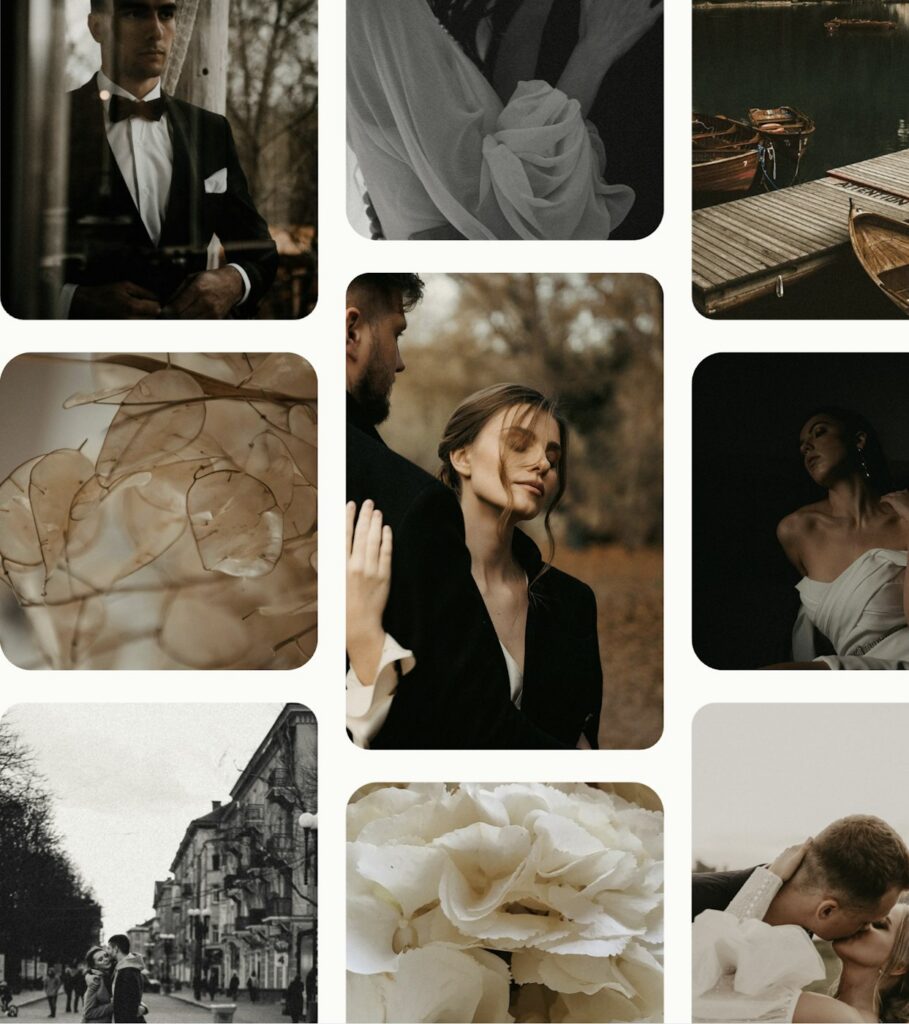
Unsplash, Pexels, Kaboom, Stocksnap. These are genuinely solid options, especially when you’re starting out. Quality collections, diverse imagery, and about 90% of the time you’re in the clear on licensing.
The frustrating part? Free stock is free for everyone. You can spend hours curating the perfect gallery and then watch another designer launch with your exact hero image two weeks before you do. It happens, and it’s demoralizing. That’s also just part of the territory when you’re working with free resources.
Free doesn’t mean entirely risk-free, either. It’s close, but you still want to read what you’re actually agreeing to.
Paid Commercial Stock: Read the Fine Print
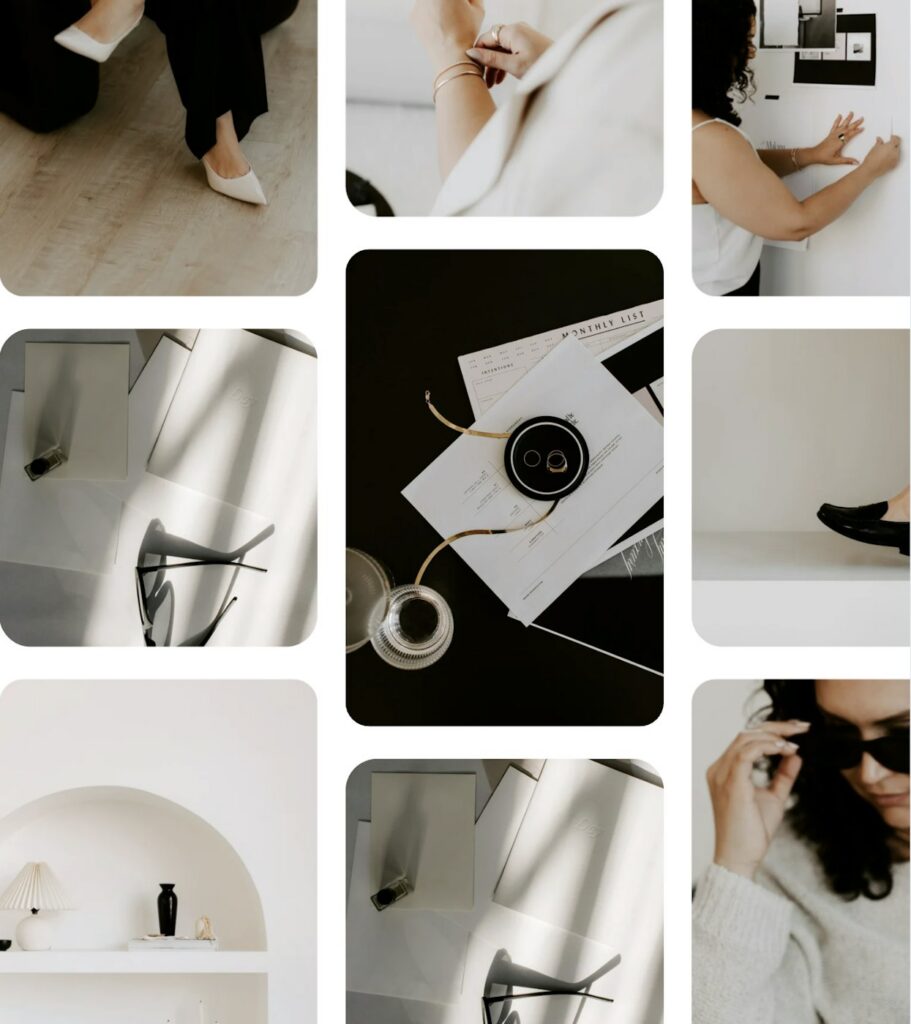
More paid stock sites with proper commercial licensing for template sellers have come online in recent years, which is genuinely exciting. Our favorites are Haute Stock, Editorial Stock Images (ESI), Élevae Visuals, and The Vault Stock.
Here is the thing we need to say loudly and clearly: a personal monthly membership does NOT cover you for commercial use on a product you’re selling. We don’t care if you’ve had that subscription for three years. If you’re selling a template with images sourced under a personal plan, you are exposed to real financial and legal consequences. You need a commercial license. That’s not negotiable. Be sure to check if your preferred stock shop offers this license and if you are unclear, reach out directly.
Photographer Collaborations: Our Favorite Option
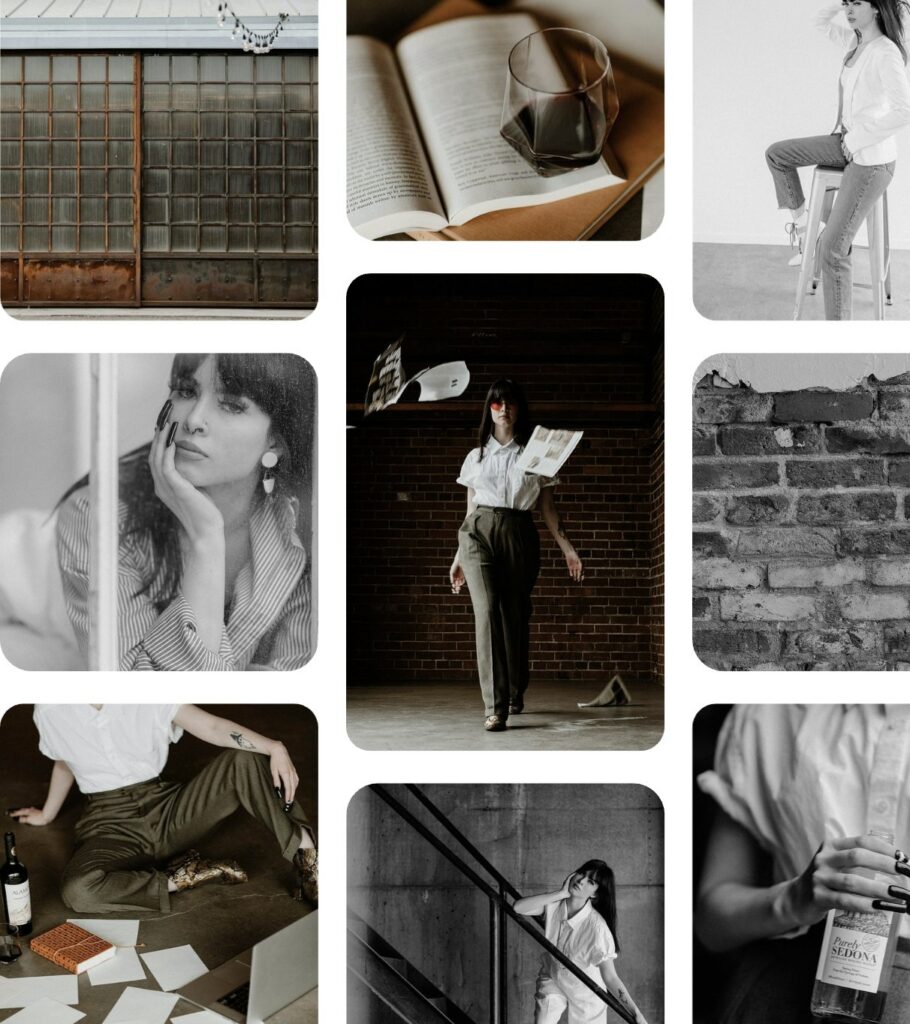
This is honestly our preferred route for premium stock when it’s done right. Here’s how we structure it: we give the photographer our template avatar and mood board, we pay a flat session fee, we cover studio rental and models and props, and we pay a 20% commission on every template sold using those images.
Is it the most expensive upfront? Yes. But those images are ours. No other designer has them, has ever had them, or ever will. When your template is competing in a market full of beautiful work, that kind of differentiation is worth real money.
If you go this route, however, get a contract. A clear one that explicitly covers commercial and resale rights between you, the photographer, and any models involved. Don’t just lean on a verbal or email agreement, draft a proper contract.
AI Imagery: A Legitimate Option With Conditions

AI-generated imagery is a real option now and the tools keep getting better. Lummi is a great place to source pre-made AI images. If you want to generate your own, Midjourney, Sora, Nano Banana, Open Art, and Higgsfield are all worth exploring.
The upside: low cost, no licensing headaches, and you get to build exactly the aesthetic you’re after.
The downside: building a full cohesive gallery with AI imagery takes way more time and skill than most people expect going in. And you need to think hard about whether it fits your template’s audience. AI imagery in a photographer’s website template is an obvious mismatch. It also might be a mismatch for audiences who are particularly vocal about AI in creative work. Know your people.
A Few Image Sourcing Principles That Always Apply
Quality matters. Relevance matters (yoga imagery for a fitness brand, not a burger). Use negative space and the rule of thirds intentionally. Make sure your gallery has a cohesive color and lighting story throughout. And please, please show diversity in your template galleries. Cultural, racial, gender, age, body size. It makes your work more inclusive and your templates more useful to more people.
A practical trick for finding cohesive stock: find an image you love on Pexels and click into it. The keywords are right there. Use them to find more images with the same feel. Or drop a few inspiration images into an AI chat and ask it to generate a keyword list you can keep searching with.
The “Bait and Switch”: We’re Calling It Out Directly
There’s a trend in this industry that we find genuinely upsetting and we’re not going to tiptoe around it.
Designers are marketing templates with gorgeous, premium photography. Then customers purchase, install the template, and find grey placeholder boxes where all those beautiful images were. Imagine ordering a cookie jar and opening it to find it full of broccoli. That’s the feeling we’re talking about.
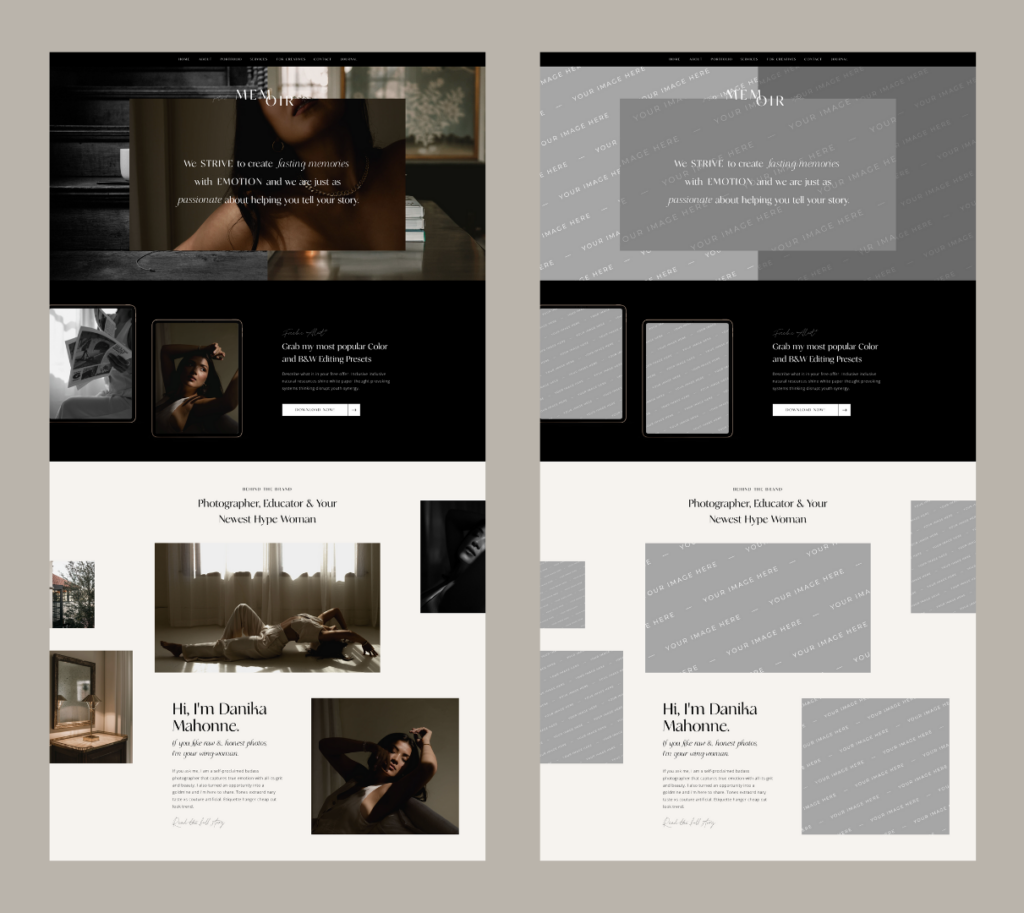
We’ve seen every justification for it. “I include a disclaimer.” “I’m not technically distributing the images.” “Other designers do it too.” “I can’t afford the commercial licensing.”
We hear you. And we still think it’s wrong, every single time.
Here’s the version of this we keep coming back to: you are using another creative’s work to sell your product without compensating them for it. That’s not a technicality or a loophole. It’s just wrong. And beyond the ethics, using images from a personal stock membership on a product you’re selling leaves your business open to real financial and legal consequences. Giving credit in your listing is not a substitute for proper licensing.
If budget genuinely is the barrier, your options are free stock sourced carefully, or AI imagery built with real skill and intention. Those are legitimate paths. The bait and switch is not.
Ultimately, imagery for your templates is a cost of doing business. It’s like a baker’s ingredients, and the good news is those ingredients are getting more accessible every year.
We actually wrote the full deep dive on this — including a real story about a model threatening legal action over free stock we’d been pinning for two years — in collaboration with our friends at Editorial Stock Images. If this section hit a nerve (it should), go read the full post here. It covers the bait and switch in full detail, the excuses designers make, and exactly how to stay protected.
Here’s the Bottom Line
We don’t believe there’s only one right way to do most things in this business. Pricing, positioning, niche, aesthetic: all of that has range. But sourcing fonts and images for designers who sell templates? That one has a right answer. Source legally. Deliver what you market. Build a business on assets you actually have the rights to.
In practice, it’s not complicated. It just requires intention, some upfront investment, and the willingness to do it the right way even when you can see people around you cutting corners.
We’ve been doing this since 2013, and we’ve built something we’re proud of. This is part of how.
If You Want the Rest of What We Know
This post covers the foundations that we believe EVERY Showit Designer NEEDS to know. Revolving Revenue covers everything else. Our collective 20+ years in the Showit template industry, packaged into a curriculum that actually helps you build a business that lasts.
Resources:
- Learn more: northfolk.co
- Instagram: @northfolkco
- Shop: Templates for Creatives
- Learn: Revolving Revenue
Pin this post for later!